
Tent hire Cape Town › Where We Deliver
Where We Deliver
Wind, ground and access change sharply across the peninsula, and all three decide which structure we can pitch and how it has to be anchored. Coastal sites take the south-easter head on, newer suburbs are mostly paving rather than lawn, and older properties are where trailer access bites. Delivery inside 60km.
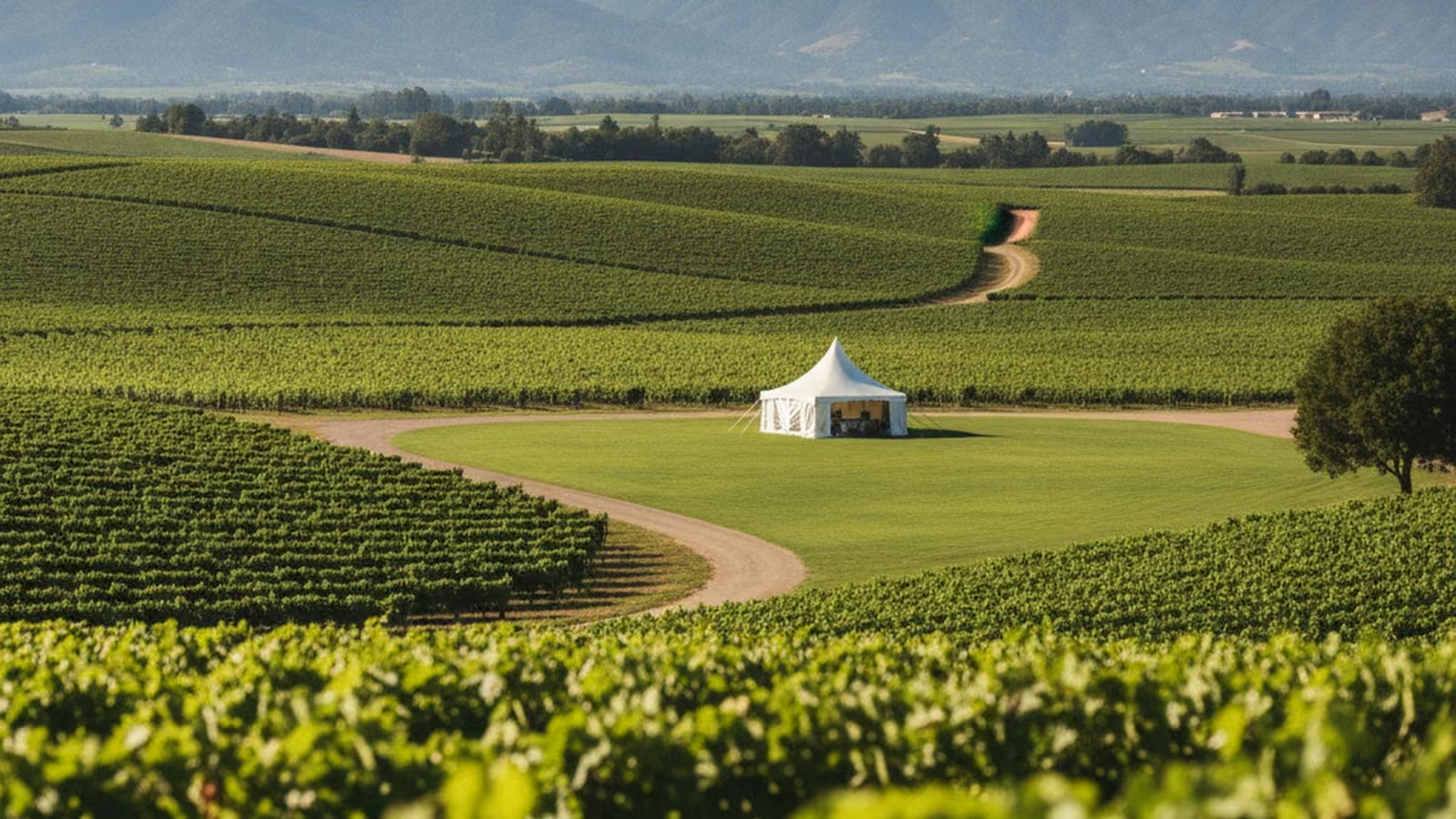
The same tent behaves differently in different parts of the Cape
We deliver across greater Cape Town. But where your event is does not just change the drive — it changes which structure we recommend and how we anchor it. A tent is a sail. Wind, ground and access are the three things that decide the job, and all three vary sharply across the peninsula.
1. Wind — the one that actually matters
Rain is rarely what ruins a Cape event. The south-easter is, and it does not blow evenly across the city.
| Exposure | Where | What it means for the structure |
|---|---|---|
| High | Blouberg, Table View, Milnerton, Strand, Gordon’s Bay, the Atlantic seaboard | Pitched low and heavily anchored. On the worst days we will recommend a frame tent over a stretch tent. |
| Moderate | Somerset West and the Helderberg basin — the south-easter funnels down off Sir Lowry’s Pass in the afternoon | Extra anchoring, and we plan the pitch around the prevailing direction rather than the view. |
| Sheltered | Durbanville, Brackenfell, Kraaifontein, Constantia, Tokai, the Winelands valleys | Standard pitch. Most flexibility on structure and orientation. |
2. Ground — whether we can peg at all
Tell us the surface when you enquire, because it decides the crew, the kit and sometimes the structure.
- Lawn and open ground — pegs go in, quickest and cheapest to anchor. Most suburban gardens, farm and estate lawns.
- Paving, concrete, driveways — no pegs. Ballast weights instead, which means a heavier load and more crew time. Common in City Bowl and Atlantic seaboard properties where there is no lawn.
- Sand — West Coast and beachfront sites need longer anchors and a different technique entirely.
- Wine estate lawns — usually ideal, but estates often restrict how close a peg goes to vines or irrigation. Ask your venue and pass the answer on.
3. Access — can the trailer reach the spot
We arrive with a vehicle and a trailer, and the structure has to be carried from wherever we can park to wherever it stands.
Older City Bowl and southern-suburb properties are where this bites most often — narrow side passages, steep driveways, steps down to the garden. None of it is a dealbreaker if we know in advance; all of it costs an hour if we find out on the day. Farm and estate venues are usually the easiest, with vehicle access right to the lawn.
Three regions, three different jobs
Wind, ground and access vary enough across the Cape that each of these deserves its own explanation rather than a line in a table.
Northern Suburbs
Durbanville to Table View. Two wind zones, newer paved gardens, and estate gate access.
Winelands
Stellenbosch, Paarl, Franschhoek and the Boland. Estate lawns, buried irrigation, slope and farm tracks.
Helderberg
Somerset West, Gordon’s Bay and Strand. The pass wind and sandy coastal ground.
Where we deliver
- Cape Town
- Northern Suburbs
- Southern Suburbs
- City Bowl
- Atlantic Seaboard
- Durbanville
- Bellville
- Somerset West
- Stellenbosch
- Paarl
- Helderberg
- Winelands
Delivery, pitching and strike are covered inside a roughly 60km working radius of the city. Past that — the Overberg, the West Coast, the southern Cape — the travel is priced as its own line on the quote so you can see exactly what it is.
Naming your venue helps. An event at an established venue rather than a private property should come with the venue name. Venues have their own rules on anchoring, access times and where a structure stands, and knowing it up front saves a round of emails.
On open ground where budget matters more than looks, a peg-and-pole tent is the cheapest way to cover a crowd.